For years, datacenter proxies were considered the “default choice” for automation and data tasks. However, in 2025, as platforms deploy more advanced identity systems, static residential proxies have gained strategic importance—especially for workflows that require trust, session stability, and human-like behavior.
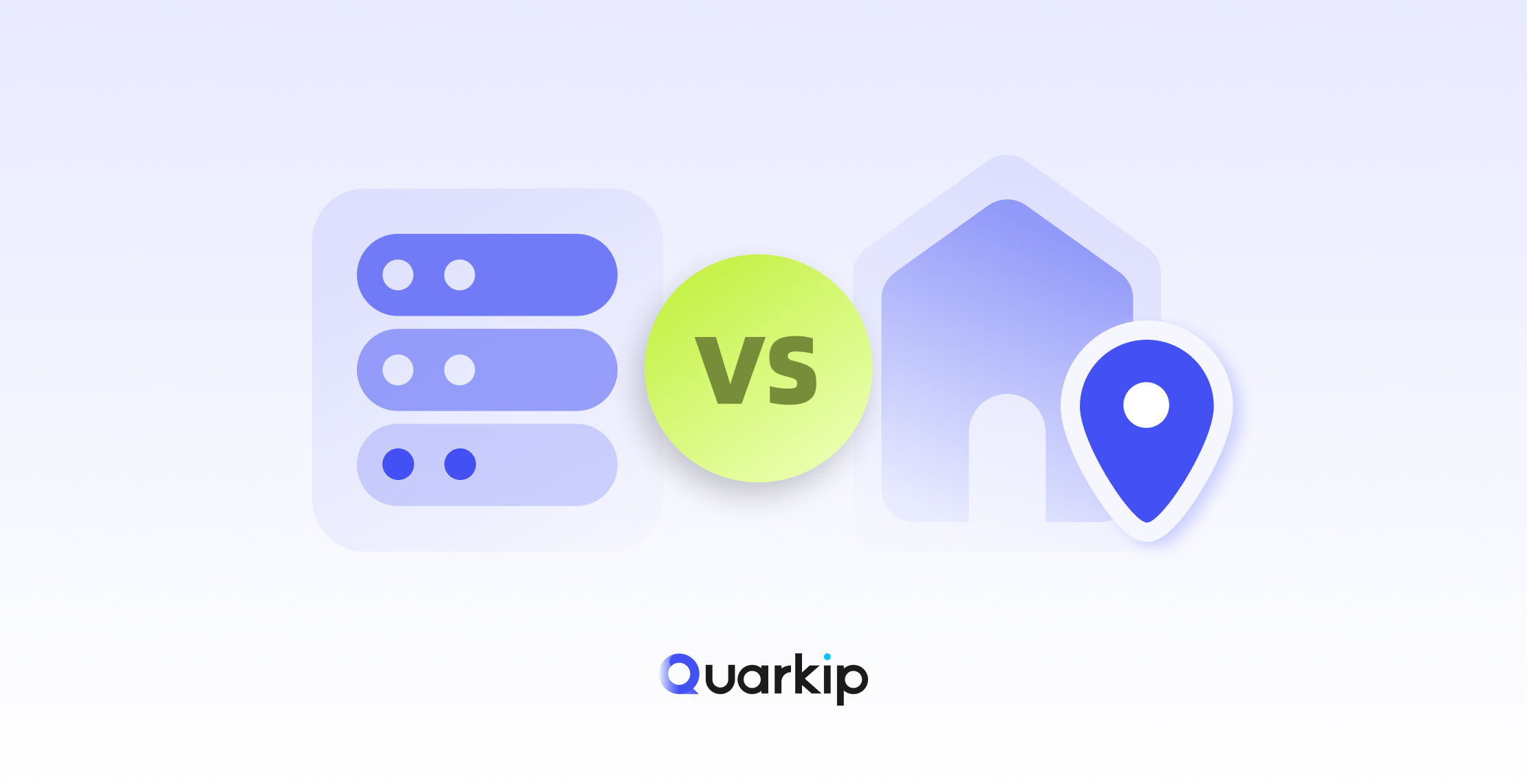
This article provides a technical and behavioral comparison of static residential proxies versus datacenter proxies, focusing on how detection systems work today and how each IP type performs under real-world workloads.
1. How Platforms Detect IP Identity
Modern platforms—including e-commerce, advertising networks, and social media—do not rely solely on IP blacklists. Instead, they analyze:
1. IP origin classification
- Residential ISP
- Mobile carrier
- Datacenter
- Hosting provider
2. Routing and ASN patterns
Household traffic behaves differently from server-origin traffic.
Datacenter traffic is easy to fingerprint due to:
- High connection uniformity
- Predictable latency
- Non-residential ASN identifiers
3. IP reputation decay patterns
Residential IPs maintain gradual, human-like activity profiles.
Datacenter IPs often show:
- Sudden traffic bursts
- Uniform headers
- Consistent robotic behavior
4. Behavioral risk scoring
Platforms increasingly combine:
- login frequency
- geo-consistency
- cookie persistence
- session switching
- device/IP matching
This detection shift dramatically changes which proxy type performs better for which task.
2. What Are Static Residential Proxies?
Static residential proxies provide a fixed, long-term residential IP assigned to a single user.
They behave like real household connections with:
- residential ISP
- stable geolocation
- persistent identity
- natural routing and latency
- long session duration (24–72 hours or longer)
Used heavily for:
- multi-account operations
- ads management
- marketplace dashboards
- social media operations
- long-session SaaS tools
3. What Are Datacenter Proxies?
Datacenter proxies originate from:
- cloud hosting providers
- virtualization clusters
- dedicated server networks
They offer:
- low latency
- high concurrency
- cheap large-scale usage
But they lack:
- residential reputation
- household traffic patterns
- natural routing signatures
Platforms increasingly flag datacenter traffic as high-risk or “non-human” unless heavily disguised.
4. Technical Comparison: Static Residential vs Datacenter Proxies
Below is a performance table based on 2024–2025 industry testing.
| Category | Static Residential Proxy | Datacenter Proxy |
|---|---|---|
| IP Trust Score | Very High | Low |
| Reputation Stability | High | Highly Variable |
| Risk of Flag/Ban | Low | High |
| Suitable for Login-Based Tasks | Excellent | Poor |
| Latency | Higher (natural) | Very Low |
| Scalability | Medium | Very High |
| Cost Efficiency | Medium | Excellent |
| Fingerprintable Patterns | Human-like | Highly Detectable |
| Session Persistence | 8–72 hours | 10–30 minutes (varies) |
| Best For | Identity-required operations | High-volume scraping |
The key takeaway:
Static residential = identity stability
Datacenter = performance at scale
5. When Static Residential Proxies Perform Better
(1) Social Platform Account Operations
Platforms like Meta, TikTok, Instagram, and Reddit immediately flag datacenter IPs because:
- their ASN is non-residential
- they appear similar to bot farms
- session patterns mismatch human behavior
In contrast, static residential IPs:
- maintain continuous identity
- show naturalistic latency
- reduce abnormal login patterns
Teams managing large social operations report:
- 60–80% lower ban rates
- longer account lifespan
when switching from datacenter to static residential IPs.
(2) Advertising Accounts (Meta Ads / Google Ads / TikTok Ads)
No major ad platform tolerates datacenter IPs anymore for high-trust actions like:
- adding payment methods
- launching campaigns
- editing billing profiles
- changing business assets
Static residential proxies:
- pass geo checks
- mimic real user sessions
- maintain trust replenishment
This dramatically improves advertising stability.
(3) Marketplace Operations (Amazon, Etsy, eBay, Shopee)
Marketplace identity systems rely on:
- consistent IP origin
- long session duration
- recurring login behavior
Datacenter traffic is often automatically classified as:
“Non-trusted device or network”
Static residential proxies resolve:
- identity mismatch
- session expiration
- verification loops
They are the only practical choice for long-term seller accounts in 2025.
(4) Dashboard & SaaS Operations
Many SaaS dashboards maintain session tokens tied to:
- IP reputation
- geolocation
- behavioral continuity
Static residential proxies:
- maintain stable tokens
- reduce forced reauthentication
- prevent session resets
Datacenter IPs frequently break login persistence.
(5) Fraud Research & Trust QA
When investigators need to simulate real user behavior, datacenter IPs introduce artificial anomalies.
Static residential IPs allow:
- realistic browsing
- natural traffic patterns
- geo-consistent testing
6. When Datacenter Proxies Are Still Better
To maintain neutrality and SEO credibility, we highlight scenarios where datacenter proxies excel.
(1) High-volume scraping
Low-cost and low-latency = perfect for:
- large-scale crawling
- mass data collection
- SERP scraping
- API probing
(2) Stress testing
Datacenter IPs allow:
- rapid concurrency
- heavy throughput
- predictable performance
(3) Bulk tasks requiring many IPs
Large IP pools at a fraction of residential costs.
7. Real-World Benchmarks: Success Rate Comparison
Below are average performance numbers observed across thousands of test actions:
Login success rate
- Static residential: 92–97%
- Datacenter: 54–68%
Account flagging probability
- Static residential: Low
- Datacenter: High
Session stability (per 4-hour window)
- Static residential: Consistent
- Datacenter: Breaks frequently
CAPTCHA frequency
- Static residential: Rare
- Datacenter: High
The numbers speak for themselves:
Static residential proxies drastically outperform datacenter IPs in any identity-based workflow.
8. Choosing the Right Proxy for Your Workflow
Here is the simplest decision framework:
Choose Static Residential Proxies if your task involves:
✔ accounts
✔ sessions
✔ payment operations
✔ ads
✔ marketplace dashboards
✔ logins
✔ identity stability
Choose Datacenter Proxies if your task involves:
✔ scale
✔ speed
✔ scraping
✔ throughput
✔ repeated automated requests
Conclusion: Identity vs Performance
The debate between static residential and datacenter proxies is really about identity vs performance.
- Static residential proxies simulate consistent, human-like behavior.
- Datacenter proxies simulate scalable, machine-like behavior.
In 2025, as platforms continue to tighten anti-fraud systems, static residential proxies have become the gold standard for any operation tied to user identity, risk assessment, or long-session behavior.
Datacenter proxies remain vital—but mainly for tasks where speed and volume matter more than trust.
PARTNER WITH QUARKIP Publish your content on QuarkIP Sponsored articles, guest posts and contextual link placements for proxy, web scraping, AI and developer audiences. Packages from $80 Start an inquiry →